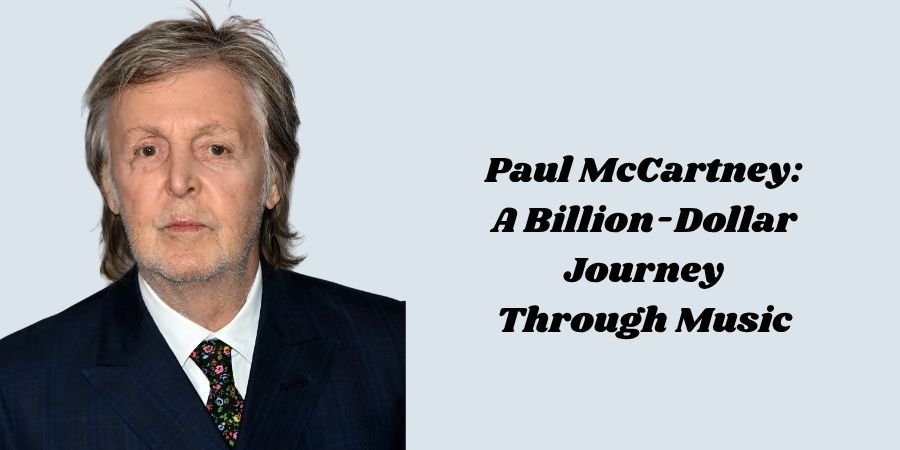
Paul McCartney has an estimated net worth of roughly $1.2 billion to $1.3 billion, equivalent to around £1.055 billion, placing him among the world’s wealthiest musicians. His fortune is not simply the result of decades of performing; it reflects an unusually valuable combination of songwriting royalties, music publishing, Beatles-related income, solo recordings, touring, licensing, and long-term asset management.
Several estimates place his wealth within this range, although there is no publicly audited figure that establishes an exact personal net worth. His financial position has grown over generations because his music continues to generate income across multiple channels.
Key contributors include:
- The Beatles catalog and associated royalties
- Solo albums and songwriting income
- Music publishing and intellectual-property rights
- Worldwide concert tours
- Streaming and digital music revenue
- Licensing and commercial partnerships
- Investments and other personal assets
This diversified model helps explain why his wealth has remained substantial long after the peak commercial era of The Beatles.
How Did Paul McCartney Build His Billion-Dollar Fortune?
Paul McCartney built his fortune by turning exceptional songwriting success into long-term intellectual-property value, then reinforcing that income through recording, touring, publishing, licensing, and decades of global cultural relevance. Unlike an entertainer whose earnings depend mainly on appearances, his most valuable assets can continue generating revenue whenever people stream, purchase, license, perform, or consume his music.
The Beatles Created the Foundation
The Beatles established the commercial foundation of McCartney’s wealth through record sales, songwriting, publishing, licensing, and continuing global demand for the band’s catalog.
Songs associated with McCartney and The Beatles have remained commercially powerful across generations. The catalog’s value extends beyond physical albums because modern music consumption creates revenue through:
- Streaming platforms
- Digital downloads
- Film and television licensing
- Advertising
- Merchandise
- Compilation albums
- Radio and public performance royalties
The continued commercial life of historic recordings is one reason music catalogs can become extraordinarily valuable assets.
Songwriting Became a Long-Term Financial Asset
Songwriting transformed McCartney’s creative output into intellectual property capable of producing income for decades. His work with John Lennon created some of popular music’s most recognizable compositions, while his later solo and Wings material expanded his personal catalog.
For musicians, ownership and control of publishing rights can be more financially significant over time than individual album sales. Every licensed use or qualifying public performance can potentially create additional royalty income.
Why Is Paul McCartney Still So Wealthy Today?
Paul McCartney remains wealthy because his income is diversified across a globally recognized music catalog, live performances, publishing, recordings, licensing, and other assets rather than depending on one revenue source. His career demonstrates how cultural longevity can turn creative work into a durable financial portfolio.
His touring career has been particularly important. Live performances allow established artists to monetize their reputation directly through:
- Ticket sales
- VIP experiences
- Merchandise
- Sponsorship opportunities
- International touring markets
His catalog provides another layer of recurring value. While touring income generally requires active participation, intellectual-property income can continue without the same level of physical involvement.
What Makes His Music Catalog So Valuable?
The music catalog is valuable because McCartney’s compositions have enduring global demand and can generate revenue across multiple forms of consumption and licensing. The commercial strength of a catalog depends on factors such as popularity, ownership rights, historical significance, streaming activity, licensing opportunities, and the expected longevity of audience demand.
The Beatles remain one of the most commercially influential musical acts in history. That gives associated intellectual property an unusual combination of:
| Value Driver | Why It Matters |
|---|---|
| Global recognition | Creates demand across international markets |
| Timeless songs | Supports recurring listening and licensing |
| Publishing rights | Generates songwriting-related royalties |
| Streaming | Creates ongoing digital consumption |
| Film and advertising | Opens additional licensing opportunities |
| Cultural relevance | Keeps older recordings visible to new audiences |
This illustrates an important business principle: intellectual property can appreciate through continued cultural relevance even when the underlying creative work is decades old.
Paul McCartney’s Career Shows the Power of Longevity
Paul McCartney demonstrates that long-term creative success can become a financial advantage when intellectual property is protected, monetized, and continuously introduced to new audiences. His career spans The Beatles, Wings, solo projects, collaborations, recordings, concerts, and numerous commercial opportunities, giving him multiple pathways to sustain both influence and income.
His journey can be viewed in several stages:
- Early breakthrough: The Beatles established worldwide fame.
- Creative expansion: Wings and solo projects developed his independent identity.
- Catalog development: Decades of songwriting expanded his intellectual-property portfolio.
- Global touring: Live performances converted continued popularity into substantial revenue.
- Digital era: Streaming and licensing introduced his music to younger audiences.
- Legacy stage: His catalog continues functioning as a valuable long-term asset.
The key lesson is that wealth accumulation at this level usually comes from compounding value over time, rather than a single payday.
How Does Paul McCartney Compare With Other Rich Musicians?
Paul McCartney is frequently included among the world’s richest musicians, with estimates around $1.2 billion-$1.3 billion placing him in an elite group of artist-entrepreneurs. However, rankings can vary substantially because celebrity net-worth estimates use different methodologies and may include or exclude private investments, property, catalog valuations, taxes, liabilities, and other assets.
Reported estimates should therefore be treated as approximations rather than audited financial statements.
The broader pattern among ultra-wealthy musicians is clear: the largest fortunes often combine creative ownership with business diversification.
Artists who control valuable catalogs can potentially benefit from:
- Royalty income
- Publishing rights
- Catalog licensing
- Touring
- Brand partnerships
- Investments
- Merchandise
- Other intellectual property
What Can Businesses Learn From McCartney’s Financial Journey?
Businesses can learn from McCartney’s career that durable value comes from creating assets that continue producing returns after the initial work is completed. A song, brand, technology platform, trademark, or original content can become a long-term asset when it is properly protected, distributed, marketed, and monetized.
A practical example is a business that spends $100,000 developing original digital content. Instead of treating that expense as a one-time marketing activity, the company can build a reusable intellectual-property library that generates leads through search, licensing, social media, partnerships, and paid distribution over several years.
McCartney’s career illustrates the same principle at a much larger scale: create once, preserve ownership, distribute repeatedly, and keep the asset culturally or commercially relevant.
FAQ About Paul McCartney
What is Paul McCartney’s estimated net worth?
Paul McCartney’s estimated net worth is approximately $1.2 billion to $1.3 billion, although exact figures vary between sources and are not publicly audited.
How did Paul McCartney become a billionaire?
Paul McCartney became a billionaire primarily through decades of songwriting and recording income, Beatles-related earnings, music publishing, solo work, touring, licensing, and other investments and assets.
Is Paul McCartney one of the richest musicians?
Yes. Paul McCartney is widely regarded as one of the richest musicians in the world, with estimated wealth exceeding $1 billion.
Why is Paul McCartney’s music catalog so valuable?
His catalog is valuable because it includes globally recognized compositions with enduring demand across streaming, recordings, public performance, publishing, licensing, film, television, advertising, and other commercial uses.
Conclusion
Paul McCartney‘s estimated $1.2 billion-$1.3 billion net worth represents more than the financial success of a legendary musician. It demonstrates how songwriting, intellectual property, global branding, touring, and long-term ownership can compound into extraordinary wealth.
For creators and businesses, the central lesson is straightforward: lasting value comes from building assets that can continue working long after the original effort is complete.
Explore the broader business story behind the world’s wealthiest musicians, and consider how intellectual property and long-term brand building can create sustainable value.