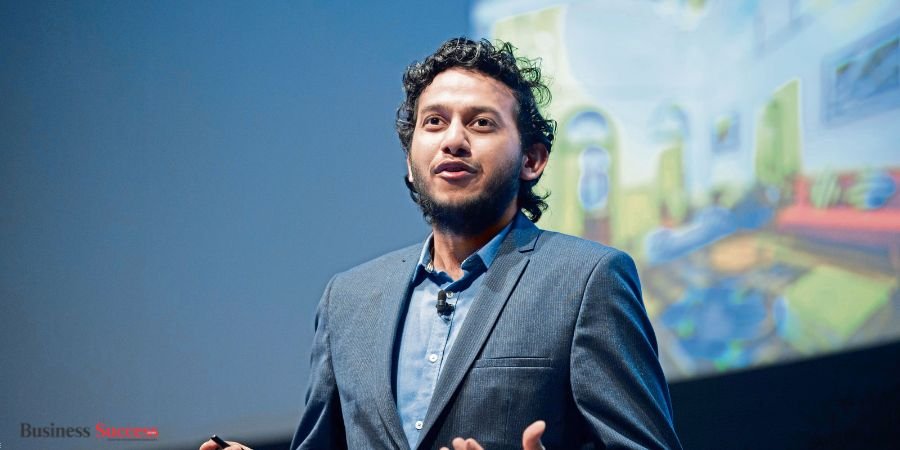
The Success Story of Ritesh Agarwal is not simply about becoming a successful startup founder at a young age. It is about recognizing an everyday problem, understanding customers firsthand, taking calculated risks, and building a business around a clear market need. Agarwal’s journey from a small town in Odisha to becoming the founder of OYO is one of India’s most closely followed entrepreneurial stories.
What makes the journey particularly interesting is how early it began. As a teenager, Agarwal traveled across India and stayed in numerous budget hotels, guest houses, and bed-and-breakfast properties. Those experiences exposed him to a recurring problem: affordable accommodation was widely available, but quality and consistency were not. OYO eventually emerged from that insight. OYO itself says Agarwal stayed in more than 100 such properties before developing the idea.
The Early Years Behind the Success Story of Ritesh Agarwal
Discovering a Problem Through Personal Experience
The foundation of the Success Story of Ritesh Agarwal was not a complicated business theory. It began with observation. While traveling around India, Agarwal noticed that budget travelers often had to choose between affordability and predictable quality. A room could be inexpensive, yet customers could not always know what standard of cleanliness, amenities, or service they would receive.
Instead of treating those experiences as simple inconveniences, Agarwal viewed them as a business opportunity. That mindset became an important part of his entrepreneurial development. He started thinking about how technology, branding, and standardized service could make budget accommodation more reliable for travelers while also helping small hotel owners attract more customers.
His early entrepreneurial interest appeared well before OYO. Forbes reported that Agarwal began selling SIM cards as a teenager and later pursued entrepreneurship instead of following a conventional college path. His willingness to experiment early helped him develop a practical understanding of customers, sales, and business operations.
The Thiel Fellowship Changed the Scale of His Ambition
A major milestone in the Success Story of Ritesh Agarwal came when he was accepted into the Thiel Fellowship. OYO identifies him as the first resident Asian accepted into the fellowship, which was established by PayPal co-founder Peter Thiel.
The fellowship provided more than financial support. It placed a young entrepreneur in an environment where unconventional ideas and ambitious technology businesses were taken seriously. For Agarwal, that exposure helped transform a small entrepreneurial experiment into a much larger vision.
This stage illustrates an important lesson for aspiring founders: early credibility can accelerate an idea, but it does not replace execution. Funding, mentorship, and recognition may open doors, but the entrepreneur still has to prove that customers need the product.
How OYO Became the Turning Point in the Success Story of Ritesh Agarwal
From Oravel to OYO
The Success Story of Ritesh Agarwal is closely connected to the evolution of Oravel Stays and OYO. Agarwal founded the business in the early 2010s, with OYO launching in 2013. OYO’s own corporate history records the opening of its first OYO property in Gurugram in 2013 and the launch of OYO’s website that same year.
The concept was straightforward but powerful: work with independent hotels and properties, introduce greater consistency, improve their online visibility, and use technology to connect them with travelers. Instead of building hotels from scratch, OYO could work with existing properties and create a recognizable hospitality network.
This approach addressed two sides of the market simultaneously. Travelers wanted affordable rooms with more predictable standards, while independent property owners needed technology, distribution, branding, and demand. That two-sided proposition became a major driver of OYO’s expansion.
Standardization Became a Competitive Advantage
One of the most important lessons from the Success Story of Ritesh Agarwal is the value of standardization. Budget accommodation had traditionally been fragmented, meaning that customers could experience dramatically different service levels from one property to another.
OYO attempted to create a recognizable experience by introducing standards around basic amenities and property presentation. Its model also used technology for reservations, pricing, distribution, and property operations. Forbes described the company’s approach as targeting existing budget hotels, improving operations and standards, and driving bookings through its platform.
That model allowed OYO to scale much faster than a traditional hotel company building and operating every property itself. The company could expand its network while relying on local property owners and a technology-driven operating model.
The Rapid Expansion of the Success Story of Ritesh Agarwal
From India to International Markets
The next phase of the Success Story of Ritesh Agarwal was defined by aggressive expansion. OYO moved beyond India into markets including Malaysia, China, Indonesia, the United Kingdom, and the United States. OYO’s own timeline records its Malaysian expansion in 2016, entry into the UK in 2018, and expansion into China and Indonesia.
The scale of the expansion was remarkable. In 2018, Forbes reported that OYO had become a major hospitality player in South Asia and had expanded significantly in China, with China representing a substantial share of its room inventory at the time.
International expansion, however, also demonstrated that startup growth is rarely a straight line. Different countries have different regulations, customer expectations, competitive environments, and operating conditions. OYO faced challenges as it expanded, particularly in the United States and during the COVID-19 pandemic.
Building With Technology and Data
Technology has remained central to the Success Story of Ritesh Agarwal. OYO’s model has relied on digital booking systems, dynamic pricing, property management tools, distribution, and data-driven decision-making.
The company introduced dynamic pricing in 2016 to respond to seasonality, demand surges, and special events. It also later introduced OYO360, a self-onboarding platform designed to help property owners manage their relationship with the platform.
This illustrates a broader entrepreneurial principle: technology becomes more valuable when it solves a specific operational problem. Rather than using technology simply because it is fashionable, OYO integrated it into pricing, distribution, customer acquisition, and property management.
Challenges That Shaped the Success Story of Ritesh Agarwal
Scaling Is Different From Starting
The Success Story of Ritesh Agarwal is often presented as a story of rapid growth, but the challenges behind that growth are equally important. Expanding a company across thousands of properties creates operational complexity. Maintaining quality, managing partners, handling customer expectations, and navigating regulations become increasingly difficult as the organization grows.
Forbes reported several challenges surrounding OYO’s international expansion, including regulatory issues in some U.S. states. The company also faced intense pressure during the COVID-19 crisis, when global travel collapsed and hospitality businesses experienced a dramatic decline in demand.
The lesson is important: startup success cannot be measured only by how quickly a company expands. Sustainable growth requires strong governance, operational discipline, financial resilience, and the ability to adapt when market conditions change.
Learning From Difficult Business Cycles
Another valuable aspect of the Success Story of Ritesh Agarwal is the importance of resilience. COVID-19 created an unprecedented challenge for travel and hospitality businesses. OYO reported a significant decline in revenue during the early stages of the pandemic, while the company also reduced its workforce in several markets.
For entrepreneurs, the experience highlights why flexibility matters. A business model that performs well during a growth cycle must still be capable of surviving periods of severe disruption. Strong entrepreneurs therefore need to think beyond expansion and consider cash management, customer retention, partner relationships, and operational efficiency.
What Makes the Success Story of Ritesh Agarwal Different?
Customer Experience Came Before the Business Model
One defining feature of the Success Story of Ritesh Agarwal is that the initial idea emerged from direct customer experience. Agarwal did not begin with the assumption that consumers needed another technology platform. He experienced the accommodation problem himself and then explored whether it represented a larger market opportunity.
That approach is useful for entrepreneurs in almost every industry. Before investing heavily in a product, founders can observe customers, identify repeated frustrations, and determine whether the problem is significant enough for people to pay for a solution.
Thinking Big While Starting Small
Agarwal began with a relatively focused problem: making budget accommodation more predictable. Yet the ambition eventually expanded into a global hospitality technology business.
The Success Story of Ritesh Agarwal therefore demonstrates the difference between starting small and thinking small. A startup does not necessarily need a massive initial product. It needs a clear problem, a workable solution, and the willingness to improve the model as new information becomes available.
The World Economic Forum currently describes Agarwal as Founder and Group CEO of PRISM, the parent of OYO, and says the company builds technology products and services for around 185,000 hotels and homes across 35 countries.
Key Entrepreneurial Lessons From the Success Story of Ritesh Agarwal
The Success Story of Ritesh Agarwal offers several practical lessons for founders, students, and professionals who want to build something of their own.
- Start with a real problem.
Strong businesses often begin by solving a problem that people repeatedly experience. - Understand customers personally.
Direct observation can reveal details that market reports may overlook. - Use technology with purpose.
Technology should make a process faster, more efficient, more accessible, or more measurable. - Build systems before scaling aggressively.
Rapid expansion can magnify operational weaknesses, so processes need to evolve alongside growth. - Be willing to change direction.
Markets evolve, and successful companies must adapt their strategy when conditions change. - Treat setbacks as business lessons.
Difficult periods can reveal weaknesses in operations, financial planning, and customer relationships. - Think globally but understand local markets.
International growth requires more than translating a product. Regulations, consumer behavior, and business practices differ from country to country.
The Broader Impact of the Success Story of Ritesh Agarwal
The Success Story of Ritesh Agarwal has also influenced how young Indians view entrepreneurship. His rise demonstrated that a founder does not necessarily need decades of corporate experience before attempting to build a significant company.
His recognition has extended across major global and Indian business platforms. OYO lists honors and recognitions including Forbes 30 Under 30, Bloomberg Businessweek’s Bloomberg 50, Fast Company’s recognition of creative leaders, and other young-leader distinctions.
At the same time, the story should not be reduced to a simple “young founder becomes billionaire” narrative. The more useful takeaway is the process behind the achievement: identifying a gap, testing an idea, attracting talent and capital, building technology, expanding into new markets, and responding to difficult business conditions.
What Aspiring Entrepreneurs Can Learn From His Journey
For someone starting a business today, the Success Story of Ritesh Agarwal provides a practical framework rather than a formula. Entrepreneurs can begin by asking three questions: What problem am I solving? Who experiences it most often? And can I create a solution that is significantly better, simpler, or more accessible?
The next step is validation. Instead of immediately trying to build a large company, founders can speak with potential customers, test a minimum viable product, study competitors, and measure real behavior. Agarwal’s own journey reinforces the value of understanding the market from the ground up.
Ultimately, entrepreneurship requires both ambition and discipline. Vision may determine where a company wants to go, but execution determines whether it can get there.
Frequently Asked Questions About the Success Story of Ritesh Agarwal
Who is Ritesh Agarwal?
Ritesh Agarwal is an Indian entrepreneur best known as the founder of OYO. He began building the business as a young entrepreneur after identifying inconsistencies in India’s budget accommodation market. He is currently described by the World Economic Forum as Founder and Group CEO of PRISM, the parent of OYO.
How did Ritesh Agarwal start OYO?
Agarwal’s idea developed from his experiences traveling around India and staying in budget hotels, guest houses, and bed-and-breakfast properties. He saw a lack of consistent quality and affordability and developed a business around standardizing and improving the budget hospitality experience. OYO launched its first property in 2013.
Was Ritesh Agarwal a college graduate?
No. OYO’s corporate information identifies Agarwal as a college dropout. His entrepreneurial path developed through early business experiments, travel, the Thiel Fellowship, and the development of his hospitality venture.
What is OYO’s business model?
OYO works with hotel and accommodation partners and provides technology, distribution, branding, pricing, and operational support. The objective is to help property owners generate demand while giving travelers a more predictable accommodation experience.
What was the biggest turning point in Ritesh Agarwal’s career?
The Thiel Fellowship was an important early turning point because it gave Agarwal financial support and access to an entrepreneurial network. Later investment from major institutions, including SoftBank, helped OYO accelerate its international expansion.
What can entrepreneurs learn from Ritesh Agarwal?
The biggest lessons include identifying genuine customer problems, learning directly from users, using technology to solve operational challenges, building scalable systems, and remaining resilient during difficult market conditions.
How large is the business associated with Ritesh Agarwal today?
The World Economic Forum currently describes PRISM, the parent of OYO, as serving around 185,000 hotels and homes in 35 countries. OYO’s own website separately reports more than 157,000 storefronts using its technology, reflecting different measurements and business definitions.
Conclusion: The Lasting Lesson From the Success Story of Ritesh Agarwal
The Success Story of Ritesh Agarwal is ultimately a story about turning observation into action. A teenager noticed a problem while traveling, investigated it closely, and eventually transformed that insight into one of India’s most recognizable hospitality technology companies.
His journey also shows that entrepreneurship is not simply about rapid growth or impressive valuations. It involves experimentation, customer understanding, technology, leadership, risk management, and resilience. OYO’s expansion and the challenges that accompanied it make the story more realistic—and more valuable—than a simple overnight-success narrative.
For aspiring entrepreneurs, the clearest lesson is perhaps the simplest: look closely at problems that people experience every day, understand them better than anyone else, and build solutions that can grow without losing sight of the customer. That principle sits at the heart of the Success Story of Ritesh Agarwal and remains relevant far beyond the hospitality industry.