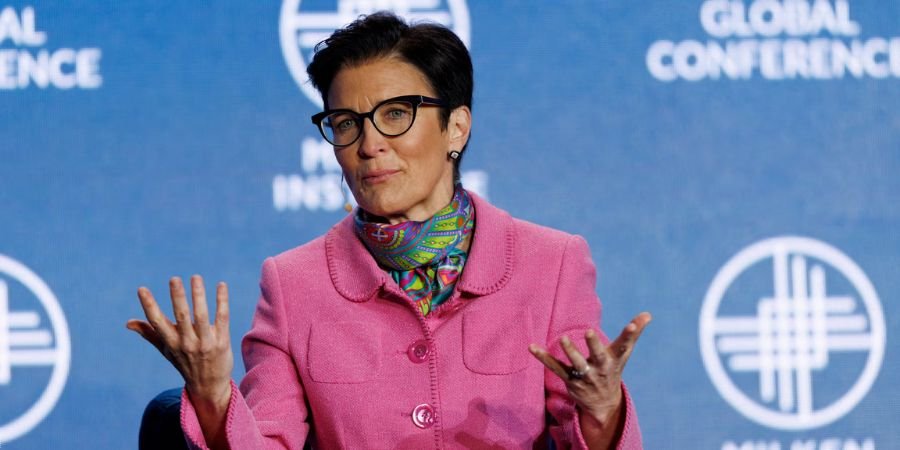
Few banking leaders have faced a transformation as complex as the one led by Jane Fraser. Since becoming Chief Executive Officer of Citigroup in March 2021, Fraser has been responsible for reshaping one of the world’s most globally connected financial institutions while navigating regulatory pressure, technological change, shifting economic conditions, and rising expectations from investors and customers.
Her significance extends beyond the fact that she became the first woman to lead a major U.S. bank. Fraser represents a broader shift in financial leadership: away from simply managing the size and complexity of a global institution and toward making difficult strategic choices about where a bank should compete, how it should operate, and what capabilities it needs for the next decade. Citi says its transformation under Fraser has focused on simplifying the organization, strengthening risk and controls, modernizing technology, and concentrating resources on businesses where it sees the greatest potential.
As of 2026, that strategy is beginning to produce measurable results. Citi reported $85.2 billion in 2025 revenue, its highest level in more than a decade despite substantial business divestitures. The bank also reported a 7.7% return on tangible common equity, or 8.8% excluding two notable items.
The story of Jane Fraser, therefore, is not simply about reaching the top of Wall Street. It is about what happens when a leader chooses simplification, discipline, technology, and long-term transformation over maintaining the status quo.
Who Is Jane Fraser?
Jane Fraser’s Early Career and Education
Jane Fraser began her professional journey outside traditional banking. She earned an M.A. in economics from the University of Cambridge and later completed an MBA at Harvard Business School. Before joining Citi, she worked as a partner at McKinsey & Company, where she developed experience in strategy and business transformation.
That consulting background has remained relevant to Fraser’s leadership style. Rather than viewing a large financial institution as a collection of disconnected departments, her approach has emphasized strategic priorities, organizational structure, operational discipline, and measurable outcomes. Her career demonstrates how expertise in strategy can translate into leadership in an industry where complexity itself can become a competitive disadvantage.
Her Rise Within Citi
Fraser joined Citi in 2004 and spent more than two decades building experience across both consumer and institutional businesses. Before becoming CEO, she attended as Citi’s President and CEO of the GC Bank. Earlier in her career, she was Global Head of Strategy and M&A, CEO of Citi Private Bank, and CEO of Citi Latin America.
This breadth of experience became particularly important when she assumed the CEO role. Fraser was not entering Citi as an outsider unfamiliar with its operations. She already understood its businesses, international footprint, clients, and internal challenges. In October 2025, she was also named Chair of Citi’s Board, adding the chair role to her responsibilities as CEO.
Jane Fraser’s Leadership at Citi
Becoming the First Woman to Lead a Major U.S. Bank
When Jane Fraser became Citi’s CEO in March 2021, she made history as the first woman to lead a major U.S. bank. Her appointment was significant not only for representation but also because it came at a critical moment for Citi. The institution needed to improve its operating model, strengthen controls, simplify its business portfolio, and deliver stronger returns.
Fraser’s leadership has consequently been judged on two dimensions. One is symbolic: opening a door that had remained closed at the highest level of major American banking. The other is operational: whether her strategy can create a stronger, more focused and consistently profitable Citi. Reuters reported in 2026 that Fraser remains the first woman to lead a major U.S. bank.
A Strategy Built Around Simplification
One of the defining features of Jane Fraser’s tenure has been simplification. Citi has exited or sold several international consumer businesses that management considered less aligned with its long-term strategy. The objective has been to concentrate capital and management attention on businesses where Citi believes it has stronger competitive advantages.
Citi now describes its model around five interconnected businesses: Services, Markets, Banking, Wealth, and U.S. Consumer Cards. Fraser has argued that a more focused organization can make faster decisions, improve accountability, reduce complexity, and allocate resources more effectively.
This strategy illustrates an important lesson for corporate leaders: growth does not always mean adding more products, markets, or employees. Sometimes sustainable growth begins by determining what an organization should stop doing.
How Jane Fraser Is Transforming Citi
Strengthening Risk Management and Controls
For a global financial institution, risk management is not simply a compliance requirement. It is fundamental to customer trust, regulatory credibility, and long-term performance. Jane Fraser has therefore made strengthening Citi’s risk and control environment a central part of the transformation.
The bank has invested in modernization, automation, technology, and operational resilience while simplifying its organizational structure. Citi has described the transformation as an effort to build stronger controls and processes while making the institution more responsive to clients.
This emphasis is particularly important because modern banking risks are becoming more interconnected. Cybersecurity, artificial intelligence, geopolitical uncertainty, data governance, financial crime, and operational resilience can affect banks simultaneously. Fraser’s approach suggests that technology and risk management must evolve together rather than being treated as separate priorities.
Building a More Technology-Driven Bank
Technology is another major element of Citi’s transformation. Under Jane Fraser, modernization has become closely connected to the bank’s broader effort to simplify its operations and improve how employees and clients interact with its systems.
Fraser has also highlighted the growing role of artificial intelligence in areas such as wealth management and productivity. Reuters reported in May 2026 that Citi was exploring AI-driven opportunities, including its “Sky” initiative, as part of its wealth-management strategy.
For financial institutions, the technology challenge is no longer simply about launching a better mobile application. Modern banks need scalable infrastructure, reliable data, automated controls, cybersecurity, AI capabilities, and digital experiences that work across borders. Citi’s transformation reflects that broader industry trend.
Jane Fraser’s Results and Citi’s Performance
A Stronger Financial Picture
The most important test of any transformation is whether it produces sustainable business results. Citi’s 2025 performance provided evidence of progress. The bank generated $85.2 billion in revenue, representing its highest annual revenue level in more than a decade. All five of Citi’s businesses reportedly achieved record revenue in 2025, while returns improved across the businesses.
The bank also reported positive operating leverage for the second consecutive year and returned $17.6 billion to common shareholders. These numbers do not prove that every part of Citi’s transformation is complete, but they indicate that the restructuring is beginning to translate into stronger financial performance.
Momentum Continued in 2026
Citi’s progress continued into 2026. In the second quarter, the bank reported $24.8 billion in quarterly revenue, its highest quarterly revenue in a decade, while net income increased 45% to $5.8 billion, according to Reuters. Return on common tangible equity reached 13% during the quarter.
However, the market response also illustrates why corporate transformation cannot be measured by revenue alone. Citi shares declined following the results as investors focused on rising expenses and questions about the outlook for the second half of the year.
That tension is important. A successful CEO must simultaneously improve near-term performance and convince investors that the underlying business model is becoming stronger over the long term.
What Leaders Can Learn From Jane Fraser
1. Simplification Can Create Strategic Strength
Jane Fraser’s experience at Citi demonstrates that complexity can become expensive. A company may have numerous businesses and still lack strategic clarity. By narrowing Citi’s focus, Fraser has attempted to make the organization more deliberate about where it invests capital and talent.
For other executives, the lesson is practical: periodically evaluate every major business line, product, market, and process. Ask whether it contributes meaningfully to the organization’s long-term strategy. If it does not, maintaining it simply because it has existed for years may not be the best decision.
2. Transformation Requires Patience and Accountability
Large organizations cannot be transformed overnight. Citi’s restructuring has involved divestitures, organizational changes, technology investments, risk-management improvements, and cultural changes.
Jane Fraser’s approach shows why transformation requires measurable targets. Citi has used return metrics and business-specific performance objectives to track progress. The company previously targeted a 10%–11% return on tangible common equity for 2026 and indicated in 2026 that it intended to set new medium-term profitability targets.
3. Leadership Is About Making Difficult Choices
Perhaps the clearest leadership lesson from Jane Fraser is that strategic leadership sometimes requires saying no. Exiting businesses can reduce revenue in the short term, but it may allow a company to concentrate resources on areas with stronger long-term potential.
For executives managing complex organizations, this is a valuable principle. A leader should not confuse organizational size with organizational strength. Sustainable growth depends on having the right structure, capabilities, people, technology, and strategic priorities.
Jane Fraser’s Broader Influence on Financial Leadership
Jane Fraser’s influence extends beyond Citi. Her position has helped reshape expectations around who can lead major financial institutions. In 2026, she was appointed to the Federal Reserve Board of Governors’ Federal Advisory Council for a one-year term, representing the Second Federal Reserve District. The council brings together banking representatives from the Federal Reserve’s 12 districts and advises the Federal Reserve Board on economic and banking matters.
She also holds leadership and advisory positions across major business and financial organizations, including the Financial Services Forum, Business Roundtable, Council on Foreign Relations, and Partnership for New York City. Citi notes that Fraser has also been awarded a damehood by King Charles III for services to the financial sector.
These roles illustrate a broader reality about modern CEOs. Their influence increasingly reaches beyond company performance. Leaders of major financial institutions participate in conversations about trade, technology, regulation, economic policy, geopolitical risk, and the future of global capital flows.
What Comes Next for Jane Fraser and Citi?
The Next Phase of the Transformation
The next challenge for Jane Fraser is arguably harder than the first. Simplifying Citi was one thing; proving that the simplified organization can consistently outperform expectations is another.
Citi’s 2026 strategy increasingly emphasizes growth alongside transformation. The bank has signaled ambitions to improve returns, expand its strongest businesses, develop wealth management, grow its institutional franchises, and use technology and AI more effectively.
The key question will be whether Citi can maintain stronger returns without allowing costs, complexity, or risk to rebuild. That will require continued investment in technology, talent, controls, client relationships, and execution.
A Leadership Test for the Long Term
Jane Fraser has already demonstrated that transformation can involve difficult decisions. The next phase will test whether those decisions create a durable competitive advantage.
Citi’s 2025 results provide encouraging evidence, while the market’s reaction to the bank’s 2026 second-quarter performance shows that investors remain focused on expenses and future profitability.
For Fraser, the objective is therefore larger than achieving a single strong year. It is about building a Citi that is simpler, more resilient, technologically capable, strategically focused, and consistently capable of generating attractive returns.
Frequently Asked Questions About Jane Fraser
Who is Jane Fraser?
Jane Fraser is the Chair and Chief Executive Officer of Citigroup. She became Citi’s CEO in March 2021 and was named Chair of the Board in October 2025. She previously held several senior positions at Citi, including President and CEO of the Global Consumer Bank.
Her career also includes experience at McKinsey & Company. She holds an MBA from Harvard Business School and an M.A. in economics from Cambridge University.
When did Jane Fraser become Citi CEO?
Jane Fraser became Chief Executive Officer of Citi in March 2021. Her appointment made her the first woman to lead a major U.S. bank.
Since then, her leadership has centered on simplifying Citi, strengthening risk management, modernizing technology, and concentrating the company on five core businesses.
What is Jane Fraser’s leadership strategy?
Jane Fraser’s strategy focuses on simplification, stronger risk and controls, technology modernization, disciplined capital allocation, and growth in businesses where Citi has competitive advantages.
The strategy is designed to make Citi more focused and efficient while strengthening its position as a global banking partner for institutions with cross-border needs and as a major wealth-management provider.
What has Jane Fraser achieved at Citi?
Under Jane Fraser, Citi has significantly simplified its business portfolio, exited several international consumer businesses, reorganized its operations, and strengthened its focus on five core businesses.
In 2025, Citi reported $85.2 billion in revenue, its highest annual revenue in more than a decade, alongside record revenue across each of its five businesses.
What makes Jane Fraser an important business leader?
Jane Fraser is important because her career combines strategic consulting experience, international banking leadership, consumer finance expertise, and executive management of a global financial institution.
Her appointment as the first woman to lead a major U.S. bank also represents an important milestone in the financial industry’s leadership landscape.
Is Jane Fraser still the CEO of Citi in 2026?
Yes. As of August 2026, Jane Fraser remains Citi’s Chair and Chief Executive Officer. Citi’s leadership profile identifies her as both Chair of the Board and CEO.
Her current priorities include completing Citi’s transformation, improving returns, growing its core businesses, and strengthening the institution for changing global economic and technological conditions.
What can entrepreneurs learn from Jane Fraser?
Entrepreneurs can learn the importance of strategic focus, difficult decision-making, measurable goals, and long-term execution from Jane Fraser’s leadership.
Her experience also demonstrates that growth does not always come from expanding into more markets. Sometimes, the strongest growth strategy is to eliminate distractions and invest more deeply in the areas where an organization can create the most value.
Conclusion: The Leadership Legacy of Jane Fraser
The story of Jane Fraser is ultimately a story about transformation. From her early career in economics and consulting to senior leadership positions across Citi and her historic appointment as CEO, she has built a career around strategy, international business, and organizational change.
At Citi, Fraser inherited a global institution with significant complexity and a pressing need for stronger execution. Her response has been decisive: simplify the organization, exit businesses that no longer fit the strategy, strengthen controls, modernize technology, and concentrate resources on businesses with greater potential. The financial results reported in 2025 and 2026 suggest that this transformation is gaining momentum, although the longer-term test remains whether those gains can be sustained.
For the broader business world, Jane Fraser offers a valuable example of modern leadership. Her journey demonstrates that meaningful transformation requires more than an ambitious vision. It requires difficult choices, accountability, resilience, technological investment, and the discipline to keep executing when results take time.
As global banking enters an era shaped by artificial intelligence, geopolitical change, digital finance, regulatory complexity, and shifting customer expectations, Fraser’s next chapter may prove just as significant as the historic milestone that brought her to Citi’s top position.