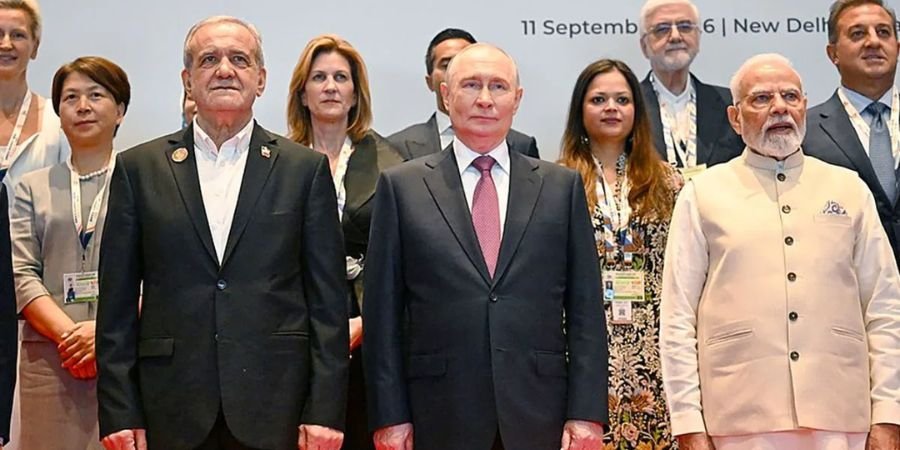
BRICS nations unanimously adopted the New Delhi Declaration on the first day of the 2026 BRICS Summit at Bharat Mandapam in New Delhi, marking a key outcome of India’s chairship of the grouping.
Prime Minister Narendra Modi proposed the adoption of the declaration at the conclusion of the first day’s session. In his closing remarks, he said the document provides direction to the shared priorities of member countries and stressed the need to convert agreed commitments into tangible outcomes.
The BRICS nations also reaffirmed the importance of consensus, cooperation and collective action as the grouping looks toward its next phase of development.
Focus on Global Governance Reform
Discussions at the summit centred on inclusive global governance and strengthening multilateralism. Modi said changing global realities require reforms to international institutions, particularly in representation, responsiveness and rule-making.
He also highlighted the need for greater participation of the Global South in shaping emerging technologies and the rules governing them. According to the Prime Minister, countries that contribute significantly to global economic growth should have an appropriate role in global economic decision-making.
Reform of the United Nations Security Council was another major issue raised during the discussions. Modi called for negotiations to be linked to a clear timeframe and measurable outcomes.
BRICS Seeks Stronger Implementation
As part of efforts to improve continuity within the grouping, Modi proposed a BRICS Continuity and Implementation Mechanism. The proposed framework would support follow-up on initiatives and outcomes through the BRICS Troika as the chairship changes from one country to another.
The Prime Minister said the mechanism would help maintain institutional momentum and ensure that decisions taken by BRICS leaders translate into concrete action.
He also called for the development of a new and ambitious agenda for the next 20 years, beginning with improvements to the grouping’s own working processes.
Global South and Future Technologies
The summit placed particular emphasis on the role of developing countries in global decision-making. Modi argued that the Global South remains heavily affected by international crises while having limited influence over many global institutions.
He proposed jointly developing 10 proposals for global governance reform, with the objective of shaping them into a BRICS reform roadmap by the next summit.
The approach reflects India’s stated focus on making BRICS cooperation more inclusive and responsive to changing global economic and technological realities.
Seafarers Emergency Support Network Proposed
India also proposed the creation of a Seafarers Emergency Support Network to connect maritime authorities and diplomatic missions of relevant countries.
The proposed network is intended to facilitate assistance to seafarers facing difficulties while working across international maritime routes. Modi noted their contribution to global trade and the challenges they can face when emergency support is required.
India’s BRICS Chairship Marks 20 Years of the Grouping
The 2026 summit coincides with the 20th anniversary of BRICS. Modi described the milestone as an important stage in the grouping’s evolution and said BRICS has established a distinct position in the international system over the past two decades.
India’s chairship has focused on Resilience, Innovation, Cooperation and Sustainability, with an emphasis on connecting BRICS initiatives with wider public interests.
More than 350 meetings were organised during India’s chairship, with delegations hosted across nearly 30 cities, according to the Prime Minister.
From Consensus to Implementation
The adoption of the New Delhi Declaration gives BRICS a common framework for addressing governance reform, multilateral cooperation and the priorities of the Global South.
The focus now shifts toward implementation. The success of the BRICS nations’ commitments will depend on how effectively member countries translate consensus into coordinated action and measurable outcomes in the years ahead.