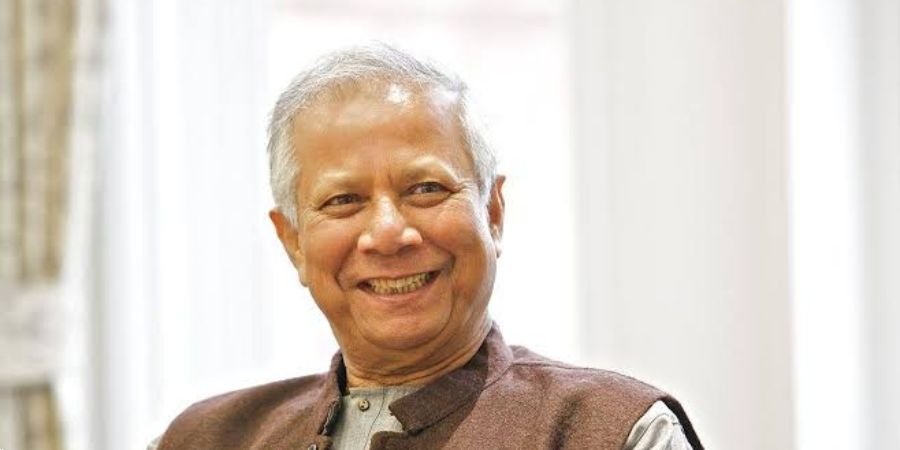
Muhammad Yunus transformed the traditional idea of banking by demonstrating that people living in poverty could become successful entrepreneurs when given access to small loans without collateral. His pioneering microcredit model challenged conventional financial institutions and helped millions of underserved people, particularly women, access capital to build businesses and improve their livelihoods.
An economist, entrepreneur, and Nobel Peace Prize laureate from Bangladesh, Yunus introduced a financial approach that eventually inspired microfinance institutions in more than 100 countries. His work established a new connection between financial inclusion, entrepreneurship, and social development.
From an Economics Professor to a Poverty-Fighting Entrepreneur
Muhammad Yunus was born on June 28, 1940, in Chittagong, Bangladesh. After studying economics at Dhaka University, he earned a Ph.D. in economics from Vanderbilt University in the United States in 1969. He later returned to Bangladesh and became a professor of economics at the University of Chittagong.
His perspective changed significantly during the Bangladesh famine of 1974. While teaching economic theories, he witnessed the financial struggles of rural families who lacked access to formal banking services. Many skilled individuals were trapped in poverty because they could not afford the basic materials required to earn an income.
Rather than treating poverty solely as an economic statistic, Yunus began exploring practical solutions. He believed that access to modest amounts of capital could help people establish independent livelihoods.
How Did a $27 Loan Change the Future of Microfinance?
A $27 personal loan to 42 families in a Bangladeshi village became the foundation of Yunus’s microcredit experiment. During the 1974 famine, he discovered that local artisans and bamboo-stool makers depended on moneylenders for working capital, often leaving them with very little profit from their labour.
In response, he provided a small loan to help 42 people purchase materials and continue their work without depending on exploitative lending arrangements.
This experiment demonstrated an important principle: people with limited financial resources could use small amounts of credit productively when conventional banking systems excluded them.
The initiative gradually developed into a broader financial model based on:
- Small loans: Providing manageable amounts of money for income-generating activities.
- No traditional collateral: Making financial services accessible to people without property or valuable assets.
- Women-led entrepreneurship: Prioritising women who faced significant barriers to formal credit.
- Community participation: Encouraging borrowers to participate in organised groups and regular meetings.
- Financial responsibility: Building repayment discipline and long-term financial independence.
The experiment eventually became the Grameen Bank Project in 1976.
Grameen Bank: Building a New Banking Model
Grameen Bank was established as an independent financial institution in October 1983 to provide microcredit to underserved communities in Bangladesh. Founded by Yunus, the bank challenged the traditional banking assumption that lending was possible only when borrowers could provide conventional security.
Its approach focused on rural entrepreneurs, low-income households, and women who had limited access to financial services.
The institution developed a model in which borrowers could access loans to support activities such as:
- Small retail shops and local trading businesses.
- Handicrafts, weaving, and textile production.
- Livestock and agricultural activities.
- Food preparation and home-based enterprises.
- Other small income-generating ventures.
According to Grameen Bank’s official information, by July 2024, it had disbursed more than US$38.8 billion in cumulative loans to approximately 10.6 million borrowers.
These figures demonstrate how an experiment involving a relatively small amount of personal capital evolved into a large financial institution serving millions of people.
Why Did Muhammad Yunus Receive the Nobel Peace Prize?
Muhammad Yunus and Grameen Bank jointly received the 2006 Nobel Peace Prize for their efforts to create economic and social development from below. The Nobel Committee recognised their contribution to connecting economic opportunity with peace and reducing the financial exclusion experienced by disadvantaged communities.
The recognition placed microcredit on the international development agenda and brought greater attention to the relationship between poverty reduction, entrepreneurship, and social stability.
His work also highlighted the economic potential of women. Grameen Bank’s lending approach prioritised women, recognising that access to financial resources could strengthen their participation in household decisions and economic activities.
The Nobel Peace Prize marked an important milestone in the global recognition of microfinance as a development approach.
From Microcredit to Social Business
Beyond lending, Yunus expanded his vision through the concept of social business, which uses commercial activities to address social problems rather than making profit maximisation the primary objective.
His approach encourages businesses to combine financial sustainability with measurable social impact.
Key areas associated with this philosophy include:
- Affordable healthcare and essential services.
- Employment and entrepreneurship opportunities.
- Access to education and basic resources.
- Sustainable economic development.
- Solutions addressing hunger and poverty.
Through initiatives associated with the Yunus Centre and Yunus Social Business, his ideas have continued to influence entrepreneurs, investors, and organisations interested in building businesses around social objectives.
This broader vision demonstrates that entrepreneurship can serve purposes beyond financial returns when business models are designed around meaningful community needs.
The Global Influence and Challenges of Microfinance
Microfinance has expanded internationally, influencing financial inclusion programmes across Asia, Africa, Latin America, Europe, and other regions. The Grameen model inspired institutions in more than 100 countries, demonstrating that small-scale lending could become part of wider economic development strategies.
However, microfinance is not a universal solution to poverty. High borrowing costs, unsuitable loan structures, repayment pressure, and inadequate business opportunities can create financial difficulties for borrowers.
Effective microfinance therefore requires responsible lending, transparent interest rates, financial education, and support for sustainable income-generating activities.
The lasting significance of Yunus’s contribution lies in challenging financial institutions to reconsider who deserves access to capital. His work helped establish financial inclusion as an important element of entrepreneurship and economic development.
Conclusion: A Small Idea with a Worldwide Impact
The journey of Muhammad Yunus demonstrates how an innovative financial idea can challenge established institutions and influence economic development across borders. What began with a modest loan in rural Bangladesh developed into an international movement that changed conversations about banking, entrepreneurship, and poverty reduction.
His legacy extends beyond microcredit. It represents a broader belief that people should have opportunities to create their own economic futures. For entrepreneurs, financial institutions, and business leaders, his work offers an important perspective on how business innovation can contribute to meaningful social change.