What does it take to lead a hospitality business in today’s market?
Of all the industries worldwide, the hospitality sector demands a distinct tenacity – even from its leaders. Unlike most industries, the hospitality space tests the mettle of its leaders in real time, in front of the customer, every day. For decades, that pressure has produced a familiar kind of leadership. One that is decisive and hierarchical. Back when markets moved slowly and customer expectations were limited, this model worked relatively well.
But over the last decade, the conditions have changed significantly. With the proliferation of digitization, guests can now discover hotels in moments, compare experiences instantly, and expect more from every stay. Hotels also have access to more data than before, changing the way they make decisions about pricing, sales, and operations.
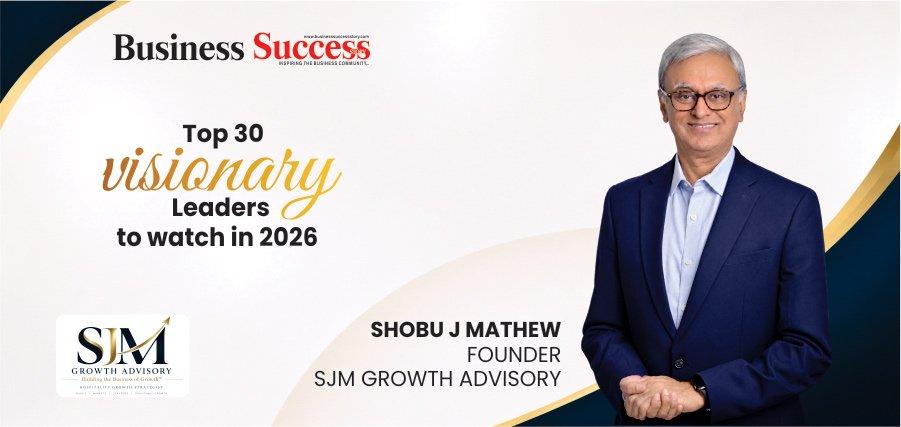
As the industry evolves, leaders must evolve with it. Instead of the top-down approach, they need to build strong teams with responsible people. More importantly, they need personalized guidance to excel in commercial excellence. Shobu J Mathew, a hospitality veteran and growth strategist, has spent over 3 decades witnessing this evolution first-hand. The experience helps him shape modern leaders in the hospitality space who can adapt and cater to the evolving industry demands.
A Turning Point – Building a Leadership Mindset
In 2000, a new InterContinental Hotel and Resort opened its doors in Goa. Being responsible for managing a hotel of this scale became a defining chapter in his career. While the property later became The Lalit Golf & Spa Resort, the experience was crucial in shaping his understanding of leadership.
Until then, he measured himself by his performance only: the way most professionals do early in their careers. Managing a hotel demanded an owner’s vision, an understanding of the brand’s promise, and an employee’s ambition, all converging to meet guest expectations with no room for delay. “Leadership is not tested when everything is ready,” he says. “It is tested when much remains uncertain, but the team still looks to you for clarity and confidence.”
The realization carried him through more than three decades of his career spent across Hyatt Hotels, InterContinental Hotels, Shangri-La Hotels, Kuoni India Travels, The Zuri Hotels, The Lalit Suri Hospitality Group, and Bloom Hotels. Spending years managing sales, marketing, revenue, distribution, hotel operations, and business development for these brands, he built a rare expertise as a Hospitality Growth Strategist. Today, through SJM Growth Advisory, he advises hotel owners, senior leaders, and sales professionals to excel in their business goals, drawing on decades of real-world operating experience.
A More Personal Approach to Advisory
When Shobu J Mathew founded SJM Growth Advisory, his intent was clear: to move beyond generic consulting models and fixed solutions. What Mathew valued most was the experience he had gained, including the lessons learned from facing challenges first hand. He shares them openly, including his mistakes, missed opportunities, and decisions he would approach differently today. “The purpose behind this is not to say, follow exactly what I did. It is to help someone understand the principles, consider the context, and make an informed choice,” he explains.
That philosophy helps him work with clients through a personalized approach. Rather than arriving with a ready-made solution, Mathew first listens to understand the situation, the challenges, and the goals involved. His role is not to tell people what to do, but to use his experience to help them make decisions that work for their own business. This not only separates his advisory approach from the consulting-by-template style but also helps him build sustainable relationships with his clients.
The Pillars of Decisive Leadership
Speed and ownership are the two critical leadership qualities in the hospitality space. Balancing the two is challenging because urgency has a way of swallowing what matters most if left unchecked. Emails, reviews, and operational fires can fill an entire day if a leader lets them, so Mathew protects time for strategic thinking, treating it as a core responsibility rather than something to get to.
The same kind of discipline shows up when he delegates responsibilities. He draws a clear line between handing someone a task and handing them an outcome. The latter means setting the expected result, the boundaries, and the timeline, then trusting someone to determine how to get there, and staying close enough to intervene if required. “The aim,” he says, “is oversight without dependency.” The thinking extends to anything innovative – even something as simple as a sharper sales approach or a better way of solving a problem that keeps recurring. What matters isn’t how original an idea sounds, but whether it creates real value for stakeholders, and whether people feel safe enough to raise it in the first place. A leader’s reaction to the first few ideas a team offers, he notes, decides whether the next ten ever get raised.
Creating Ownership Through Leadership
One of the biggest lessons Mathew learned from his tenure in hospitality leadership was that building a strong team takes more than authority. He saw this clearly during his eight years at Bloom Hotels. He opened the first Bloom Suites in Calangute and later managed sales and marketing across several properties as the brand expanded through Goa and beyond. As the business grew, he realised that scaling such a brand required more than hierarchy; it required a team that could take ownership. People need to understand the direction a brand is headed and how their work contributed to it.
Over time, this became a core tenet of his leadership: can the team perform even when the leader is not around? “If a team cannot function without its leader,” he says, “that may indicate dependency rather than successful leadership.” This belief also shapes his approach to mentorship. He does not simply give people answers. Instead, he encourages them to think through a situation, consider their options, and make their own decisions. The focus is not just to help someone solve a problem today. It is to give them the confidence and judgment to handle the next one on their own.
Building a Legacy that Outlives Titles
Mathew’s conviction about leadership outlives any growth charts. He measures success not by revenue, but by whether the people he worked with can now operate without him. Whether someone he mentored gained the confidence to take on a bigger role. Whether a business he advised keeps making sound decisions long after the engagement ends. Titles change, targets reset every year, and even the best strategy eventually gets replaced by a better one. “I do not want to be remembered for how many people worked for me,” he explains, “but for how many people grew with me, and how many went on to help others grow.”
For a career built inside some of hospitality’s most recognized brands, it is a strikingly personal way to define success. The results may be measured by the business, but the real legacy lies in the people shaped along the way. For Mathew, that is the real measure of leadership and success.